2012 19/Feb 5:19am

Galaxy Nexus case review: Case-Mate POP!

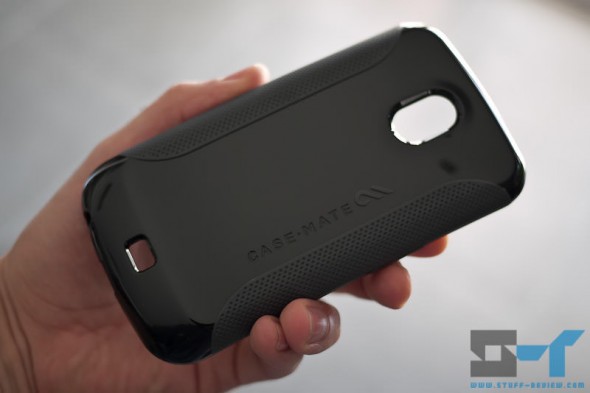
Case-Mate POP! case for Galaxy Nexus - back

Case-Mate does one thing, it makes cases, the kind our devices need; especially costly devices with big glass fronts that we carry all day with us and might take a fall or two. The Samsung Galaxy Nexus smartphone is such a device and its slippery plastic body also doesn’t help at all — as you will find by reading our in-depth review right here.

We’ve already reviewed one case for the Galaxy Nexus, the OtterBox Defender, but we understand that it might be overkill for some as it adds significant bulk. This review will look at the Case-Mate POP!. It’s a one piece case that’s made of two materials, a shiny hard plastic and a soft rubber side grip. The rubber is grey but the shiny plastic comes in black, white and pink, creating a “pop”, see!
continue reading

2012 18/Feb 9:24am

Olympus OM-D E-M5 size comparison to the Sony NEX-7, Panasonic GX1 and Fujifilm X-Pro1

Olympus E-M5, Panasonic GX1, Sony NEX-7 and Fujifilm X-Pro1 overall size comparison

If you are a friend of mirrorless digital cameras it probably means that compactness is high on your priority list. Though much info has been coming in on the autofocus speed and high-ISO performance of the newly announced Olympus OM-D E-M5 Micro Four Thirds (MFT) camera, we haven’t really tackled its size compared to other mirrorless camera.
continue reading

2012 09/Feb 5:36pm

Olympus E-M5 vs. Fujifilm X-Pro1 vs. Panasonic GX1 vs. Sony NEX-7 comparison

Olympus OM-D E-M5 back black

We needn’t say much on the state of the competition in the compact mirrorless interchangeable lens camera (MILCs) space. In the short period of a few months we’ve seen the release of some pretty amazing high-end mirrorless shooters with very distinct design and engineering decisions and featuring a number of innovations.

The latest entrant is the Olympus OM-D E-M5 Micro Four Thirds (MFT) digital camera that has claimed a number of firsts. It’s the first MFT rangefinder-style camera with a built-in EVF and the first with a weather-sealed body, it is also the first ever camera with 5-axis image stabilization, while Olympus is claiming that the camera has the fastest autofocus of any interchangeable lens camera.
continue reading

2012 23/Jan 4:45pm

Galaxy Nexus case review: OtterBox Defender series case

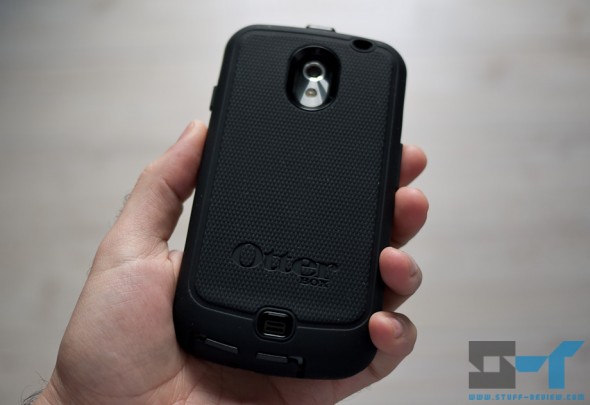
Galaxy Nexus OtterBox Defender series case back in hand

If you’ve read our Galaxy Nexus review (and you should definitely read it here if you haven’t) then you know that using the smartphone without a case is an accident waiting to happen. In fact, my first Galaxy Nexus had suffered a deadly drop. Hence comes the dilemma, enjoy the beautiful and thin lines of your pricey and very fragile new smartphone by carrying it naked, risking its demise at any point, or sacrifice some of the thinness for the peace of mind a case brings.

Well if you are thinking of going with the latter then you might want to read on. OtterBox makes cases, and the company is known for some of the most solidly built cases you will find. We’ll be looking at the most rugged of the pair of OttorBox cases for the Galaxy Nexus, the Defender Series case. In fact this the most rugged case for the Galaxy Nexus that I know of, but correct me if I’m wrong.

For many this case will be overkill, and if size is a big issue then you might want to look elsewhere, because ruggedness comes at a cost. This is the case for the very active or very clumsy. If you are into sports, if your work puts high demands on you or if you want the ultimate protection for your smartphone, read on.
continue reading

2012 19/Jan 12:45pm

iBooks Author hands-on: how anyone can now publish interactive books to the iPad

iBook Author: template chooser

Apple has just announced the free iBooks Author Mac OS X application, which allows anyone to create and publish eBooks to Apple’s iBooks platform for the iPad. I went ahead and downloaded the free app from the Mac App Store, which only took a couple of minutes, and fired it up to for a first test.

First impressions are really good, the key to the application is simplicity. If you’ve ever used Blurb to publish a book, the experience is similar but faster and more accurate. On launch, you get a choice from six existing templates, or you can start from scratch. The six templates are OK for a start but relatively limited.

After that it’s a matter of putting down the text, either writing it directly or dropping a document on the page (you have full control on the typography and colors of course), and other content. Dropping images works very smoothly and you can easily move, resize, bring to front or send back. Things auto-align nicely and text boxes can snap to the end of other boxes automatically. While you are moving objects, guides pop-up to show you the margins between other objects and the page ends.
continue reading

2012 08/Jan 6:31pm

Fujifilm X-Pro1 vs. Panasonic GX1 vs. Sony NEX-7 vs. Olympus E-P3 comparison

Fujifilm X-Pro 1 camera with 18mm lens

Digital mirrorless interchangeable lens cameras (MILCs) have gone a long way since Panasonic released the first Micro Four Thirds camera over 3 years ago. During this time, we’ve seen practically all major camera manufacturers (except Canon) entering the space that was once the privilege of multi-thousand dollar Leica Rangefinders. Fujifilm showed us what they can do with a high-end compact camera in their excellent fixed-lens FinePix X100 shooter last year. Now, Fujifilm plans to release a new X-series MILC system led by their X-Pro1 camera.

Despite coming late to the party, Fujifilm intends to enter with a bang. The X-Pro1 has Leica-like controls with individual shutter speed and exposure compensation dials, while each lens has a manual aperture ring. Fujifilm has also improved on the X100′s hybrid electronic/optical viewfinder, and the second generation has found its way in the X-Pro1.

In our comparison below we have pitted the Fujifilm X-Pro1 against the best of the competition, the Panasonic GX1, the Sony NEX-7 and the Olympus E-P3. All four share the same rangefinder-style body, though not all come with a built-in viewfinder. It’s interesting to note that the X-Pro1 includes a number of technologies which are unique, including the new X-Trans CMOS sensor and hybrid viewfinder.
continue reading
2011 05/Dec 6:41pm

Samsung Galaxy Nexus complete review

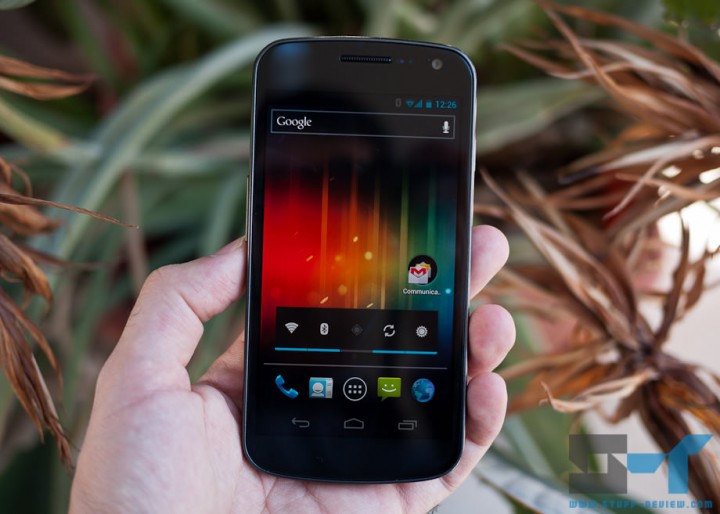
Samsung Galaxy Nexus in hand - on homescreen

There has been a lot of buzz around the release of the Samsung Galaxy Nexus, and that has mostly centered on the fact that this is the first smartphone to carry the latest (and greatest) iteration of Android 4.0 Ice Cream Sandwich (‘ICS’). Similar to previous Nexus devices, it acts as Google’s launch device for a major Android version.

What one must understand is that this is a mass adoption device rather than a super high-end smartphone. It lacks the exotic materials found in other high-end phones and features such as Bluetooth 4.0, GLONASS satellite navigation or an advanced camera.

Nevertheless, it’s a well-executed device, albeit a few early teething problems. The Galaxy Nexus features a sharp 4.65-inch Super AMOLED 720p display and a fast dual-core 1.2GHz processor. It’s also a pure Google Android experience smartphone, without any user interface customizations such as HTC’s Sense or Samsung’s TouchWiz, which is important for some.

Most importantly, it’s the only device to officially run Ice Cream Sandwich, for a while, and similar to past Nexus devices, it will be the first smartphone to receive future software updates as they are released by Google — at least until the next Nexus device is launched. Although the Galaxy Nexus might not be bleeding edge with regards to hardware features, it will be cutting edge on software, which, can be argued, is more important.

This review is an in-depth look at the Samsung Galaxy Nexus, and centers on the device’s hardware features, real-life performance, as well as what’s new in Android Ice Cream Sandwich. We will further cover Android Ice Cream Sandwich in more detail in a future review. So read on for our opinion on the latest and greatest Android smartphone.
continue reading
2011 20/Nov 3:18pm

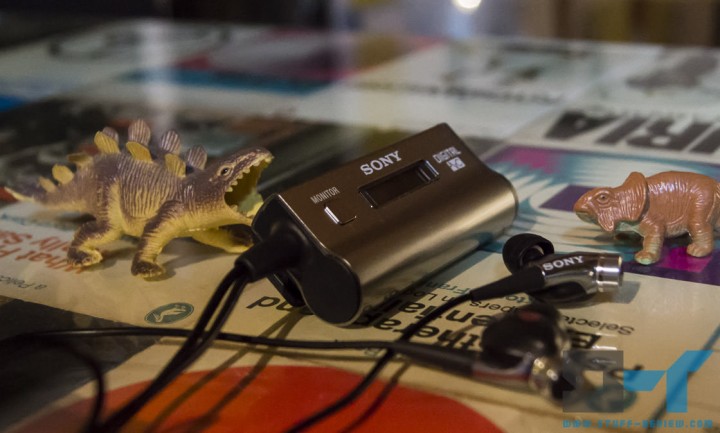
Sony MDR-NC300D noise cancelling earbuds review – monster noise-cancelling performance!

Sony MDR-NC300D earbuds for monster noise cancelling performance

This review is part of our round-up of three active noise-cancelling (ANC) headphones. We’ve already covered the excellent Audio-Technica ATH-ANC23 in-ear headphones here, and I recommend that you read that review as well. This review centers on the Sony MDR-NC300D noise cancelling earbuds and the final review will be of the Panasonic RP-HC55-S. As we’ve mentioned before, this group test only deals with the more portable earphone variety; if you read Stuff-Review you will know how much we appreciate portability and I wouldn’t imagine adding bulky headphones to my daily load.

You might also want to brush up on the terminology and technology behind active noise-cancelling headphones. Our primer, which can be found here, covers the different types of noise reduction implemented in consumer audio headphones and the differences between active noise cancellation and passive sound isolation.

In simple terms, sound isolation works by stopping sound from reaching your eardrum through soundproofing, while noise cancellation through special circuitry which create a noise-cancelling sound wave. I’m more in favor of the latter kind, simply because they offer the most comfortable experience and are more effective in cutting out constant frequency noise. Most ANC headphones offer noise isolation as well, and when you load-up your music, turn the ANC circuit on and cut-out the outside noise you are transported to a different world.

If you use any form of public transportation, or frequent any public place you cannot appreciate how much ambient noise there really is until you cut it out.
continue reading

2011 13/Nov 3:52pm

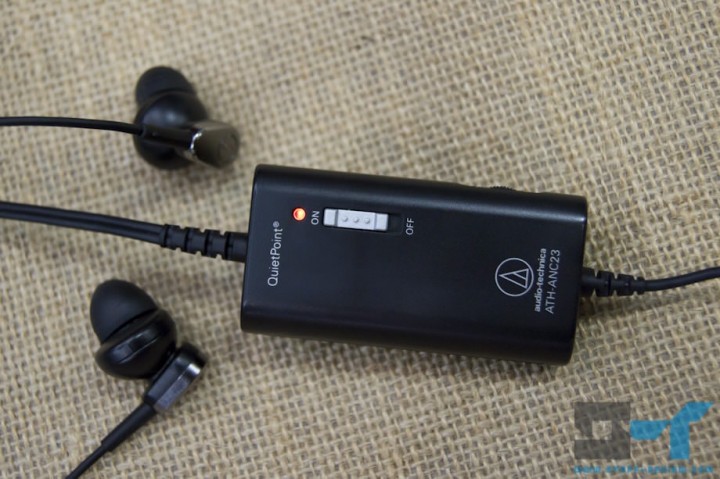
Audio-Technica ATH-ANC23 QuietPoint in-ear headphones review

Audio-Technica ATH-ANC23 active noise-cancelling in-ear headphones

We’ll be covering an important, but neglected, section of portable audio, active noise-cancelling (ANC) headphones. We’ve already covered in detail the different types of noise reduction implemented in consumer audio headphones and the differences between active noise cancellation and passive sound isolation, so you may want to read our primer here first.

In simple terms, sound isolation works by stopping sound from reaching your eardrum through soundproofing, while noise cancellation through special circuitry which create a noise-cancelling sound wave. I’m more in favor of the latter kind, simply because they offer the most comfortable experience and are more effective in cutting out constant frequency noise. Most ANC headphones offer noise isolation as well, and when you load-up your music, turn the ANC circuit on and cut-out the outside noise you are transported to a different world.

If you use any form of public transportation, or frequent any public place you cannot appreciate how much ambient noise there really is until you cut it out.

We’ll look at three different ANC earbuds: first, in this review, the Audio-Technica ATH-ANC23, then in follow-up reviews, the Sony MDR-NC300D and finally the Panasonic RP-HC55-S. This group test only deals with the more portable in-ear earbuds/earphones; if you read Stuff-Review you will know how much we appreciate portability and I wouldn’t imagine adding bulky headphones to my daily load.
continue reading

2011 07/Nov 10:47am

Panasonic GX1 vs. Sony NEX-7 vs. Fujifilm X100 vs. Olympus E-P3 comparison

Panasonic Lumix GX1 MFT camera black and silver side-by-side

With the successor to the GF1 finally announced, Panasonic is coming back strongly to the space it helped create. The Panasonic GX1 is the company’s new high-end rangefinder style mirorrless camera. But, as we’ve discussed in our initial in-depth coverage, unlike its predecessor it’s coming up against some very serious competition.

To put things into perspective, we’ve the GX1 against the top competitors from Sony, Fujifilm and Olympus. Our comparison includes the super-high-end NEX-7 with an APS-C sensor and the amazing OLED EVF, the excellent fixed lens APS-C Fujifilm FinePix X100 and a fellow Micro Four Thirds camera, the Olympus E-P3. So, read on to check out how our new MILC holds up.
continue reading

2011 28/Oct 1:45pm

Sony Alpha A65 in-camera JPEG vs. RAW high ISO image quality test

Sony A65 ISO 800 test - RAW vs. JPEG vs. RAW with noise reduction applied

Having had the Sony Alpha A65 in our hands for a couple of days now, we are slowly getting to grips with what this 24-megapixel APS-C Exmor sensor SLT shooter is capable of. One of the first things we noticed, during our initial hands-on with the A65, was the level of noise in the images at ISO 800 and higher, but also the high level of in-camera noise reduction applied to JPEGs. I have to confess that using the Fujifilm X100 for the past few months has certainly spoiled me in terms of low-light high ISO performance and out of the camera JPEGs; but that’s another story.

A higher level of noise is expected at the camera’s full 6,000×4,000 output resolution, as is usually the case with packing more pixels in the same sensor area. A lot of this noise will become non-visible as you scale down images for print or screen uses. Starting with a higher level of noise at a higher resolution is not all that bad. However, because of this — the larger images and noise levels — we’ve found that the images from the camera benefit from some serious post processing. Note, our findings with the A65, will also apply to the A77.
continue reading

2011 25/Oct 5:17pm

Sony Alpha SLT-A65 initial hands-on, OLED EVF and high ISO tests

 Sony Alpha SLT-A65 hands-on

Despite the ominous signs on general availability of the Sony A65, we’ve already confirmed that the camera is shipping to a few lucky individuals in the US.

Stuff-Review has managed to snatch one of the first Sony Alpha SLT-A65 DSLT cameras to ship. This is an initial hands-on with the camera, which is an actual final production unit, and we’ll be sharing some first impressions and test results. As we spend more quality time with the A65 we will update you on our finds.
continue reading

privacy policy | copyright 2009-2012 Stuff-Review | tech opinions and advice for real people

Stuff-Review: { News, reviews and guides on gadgets, objects & ethereal stuff }